Kimi K3 vs Claude and GPT: Does It Really Win?
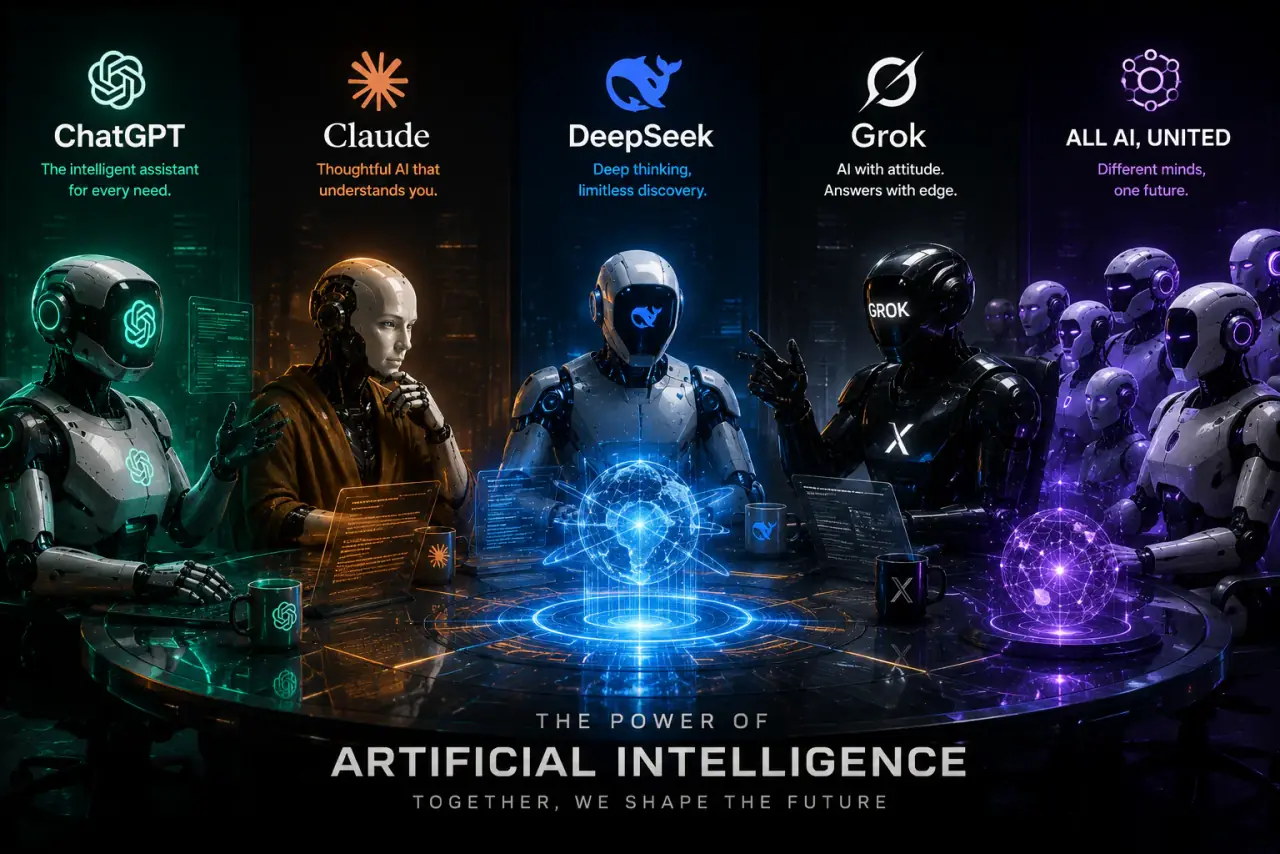
On 16 July 2026, Moonshot AI released Kimi K3, a 2.8-trillion-parameter model the company calls the largest open-weight system shipped to date. The launch came with a bold framing: competitive with Anthropic's Claude Fable 5, and ahead of Opus 4.8 and OpenAI's GPT-5.5. So does a Chinese model now beat Claude and GPT? The honest answer depends entirely on which benchmark you read—and who ran it.
What K3 actually is
K3 is a multimodal reasoning model (text and image in, text out) with a 1-million-token context window and an always-on "thinking mode." Pricing is $3 per million input tokens and $15 per million output tokens—expensive for a Chinese lab, and roughly an order of magnitude cheaper than Western flagships on input.
It is billed as open-weight, but with a caveat that matters: at launch the model was available only through Kimi's apps and API. Moonshot announced that it intended to publish the full weights on 27 July 2026 under a modified MIT licence. That date is still in the future at publication time, so “open” remains a company commitment rather than a downloadable fact. This article will treat the release as complete only after the files and licence are publicly inspectable.
The claim vs the independent scoreboard
Here is where separating marketing from measurement matters. Moonshot's own launch said K3 "substantially outperformed" Opus 4.8 and GPT-5.5. Independent testing tells a more measured story.
On the Artificial Analysis Intelligence Index—a composite run by a third party—K3 debuted at #3 with a score of 57, described as comparable to Opus 4.8 and GPT-5.5 but behind Claude Fable 5 (about 60) and GPT-5.6 Sol (around 59). So on the headline "which model is smartest overall" number, K3 does not beat the current Claude and GPT flagships. It matches the previous generation.
Where K3 genuinely leads
The picture flips on specific tasks—and this is the real story. On agentic and coding leaderboards, K3 posts frontier results:
- Front-end web development (Arena AI): K3 scored 1,679 to Fable 5's 1,631, ranking #1 in six of seven front-end domains.
- Agentic workflows: on Artificial Analysis's GDPval-AA v2 it reached 1,668 Elo, ahead of GPT-5.5 (1,494) and Opus 4.8 (1,600), though still behind Fable 5 (1,760). It also took #1 on AutomationBench-AA at 53%.
- Code refactoring and debugging: on the BridgeBench arena it reportedly won seven of eight categories against Fable 5.
One web-engineering test, Browserbench, reportedly marked the first time an open model outscored every proprietary rival. So "Kimi K3 beats Claude and GPT" is a true statement—on front-end coding and several agentic benchmarks, measured independently. It is a false statement about overall reasoning intelligence, where Fable 5 and GPT-5.6 stay ahead. Both can be quoted honestly; only one is the full picture, and the gap between them is exactly where marketing lives.
If you want to pressure-test these claims on your own work rather than trust any leaderboard, the practical move is to run the same prompts through an assistant you already use and compare outputs side by side.
The caveats that don't make the press release
Two numbers deserve attention. First, K3's hallucination rate on the AA-Omniscience test rose to 51%, up from 39% on the K2.6 line—accuracy improved, but the model fabricates confident answers more often. For anything factual or high-stakes, that is a real cost. Second, independent reviewer Simon Willison cautions that headline benchmarks miss "the thing that matters most for today's model: agentic tool calling," and that crowd-favourite tests drift once labs optimise for them.
There is also the perennial contamination question with any model that tops fresh benchmarks fast: leaderboard scores are a signal, not proof of real-world reliability. K3's lead in front-end code is well-documented; its everyday robustness is still being established.
For the wider context on why Chinese labs keep closing the gap, see our look at China's dark factories and how we test AI vs humans on five real tasks. If you just want capable tools without the flagship price, our best free AI tools of 2026 is a more useful starting point than any Elo score. Text generation isn't the only race worth checking claims against — our Sora vs Veo status check applies the same "verify before you believe the headline" approach to AI video.
The takeaway
Kimi K3 is real, released, and genuinely frontier-class on front-end coding and agentic tasks—where it beats Claude Fable 5 and GPT-5.6 on measured leaderboards. On overall intelligence it sits third, level with the last Claude and GPT generation, not the current one. It is cheaper, soon to be open-weight, and it hallucinates more. "Surpasses Claude and GPT" is accurate only if you name the benchmark. Anyone who drops that qualifier is selling, not decoding.
✔ How we checked this
Company claims (Moonshot's launch material) are kept separate from independent measurements. Independent numbers come from Artificial Analysis's Intelligence Index and public arena leaderboards; comparison models are Claude Fable 5, Opus 4.8, GPT-5.6 Sol and GPT-5.5. Full open weights were not yet published at time of writing.
Information verified as of the publication or update date shown. Technology moves fast — check the sources below.
Sources
- Kimi K3 achieves #3 in the Artificial Analysis Intelligence Index, comparable to Opus 4.8 and GPT-5.5 — Artificial Analysis
- China's Moonshot AI unveils Kimi K3 that rivals OpenAI, Anthropic — CNBC
- China's Moonshot AI releases Kimi K3, the largest open-source model ever — VentureBeat
- Kimi K3, and what we can still learn from the pelican benchmark — Simon Willison
- China's Kimi K3 Is Out—And Beats Claude Fable and GPT 5.6 Sol on Key Benchmarks — Decrypt